
Eligible Doesn’t Mean You Should Take The Full Personal Loan
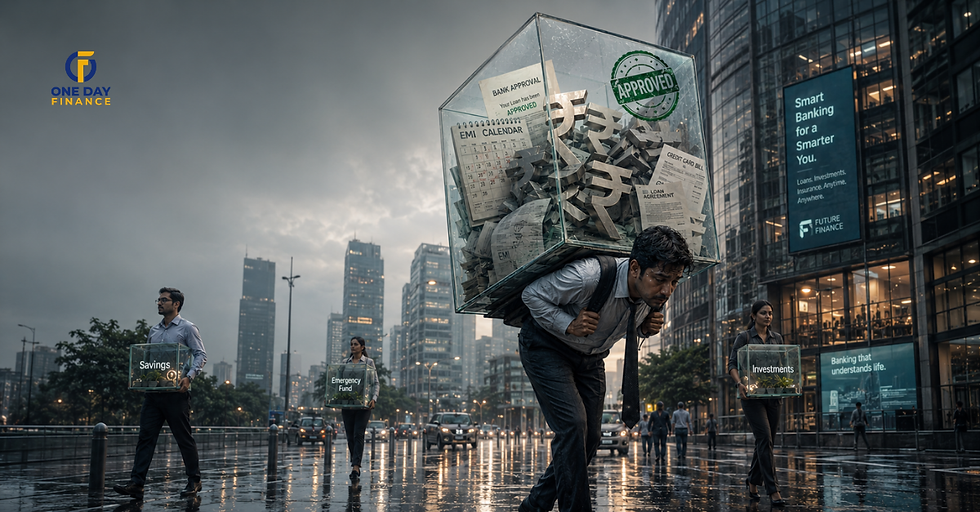
Getting approved for a personal loan can feel reassuring. Many borrowers assume that if a bank or NBFC is willing to lend a large amount, it automatically means they can comfortably afford it.
That assumption often leads to financial stress.
Loan eligibility is based on lending formulas, income estimates, repayment history, and credit behaviour. But lenders evaluate risk differently from how individuals should evaluate financial stability. Just because you qualify for a certain amount does not always mean borrowing that amount is the right decision.
India’s personal loan market has expanded rapidly over the last few years. According to RBI data discussed in The Economic Times, lenders have become increasingly cautious as stress levels in unsecured retail lending continue to rise. One major reason is overleveraging — borrowers taking on more debt than they can realistically manage over the long term.
Why Personal Loan Eligibility Can Be Misleading
Lenders primarily calculate eligibility using:
Monthly income
Existing EMIs
Credit score
Employment profile
Repayment history
These calculations help lenders estimate whether repayments are possible. They do not account for:
Lifestyle expenses
Future emergencies
Family responsibilities
Income uncertainty
Long-term savings goals
A borrower may technically qualify for a ₹15 lakh loan while still struggling to maintain healthy monthly cash flow after repayment begins.
The Real Cost of Overborrowing
Higher loan amounts often create financial pressure gradually rather than immediately.
Common consequences include:
Reduced savings capacity
Increased dependence on credit cards
Difficulty handling emergencies
Delayed financial goals
Stress from high fixed monthly obligations
Financial planners generally recommend maintaining a balanced repayment-to-income ratio rather than maximising borrowing capacity. When EMIs consume too much of monthly income, even small disruptions can become difficult to manage.
A Simple Example
Consider two borrowers earning ₹1 lakh per month.
Borrower A takes the maximum eligible loan with a ₹42,000 EMI.
Borrower B borrows a smaller amount with a ₹24,000 EMI while maintaining emergency savings and investment contributions.
Although both were eligible for the same loan amount, Borrower B usually retains stronger financial flexibility and lower long-term risk.
Questions to Ask Before Accepting a Personal Loan
Before taking any loan, ask yourself:
Do I truly need the full approved amount?
Will this EMI still feel comfortable after six months?
Can I continue saving after repayment starts?
Am I borrowing for value or convenience?
Will this loan improve my financial position or weaken it?
Responsible borrowing is not about maximising eligibility. It is about maintaining financial stability while achieving your goals.
How One Day Finance Can Help
At One Day Finance, we help borrowers make informed lending decisions instead of simply chasing larger approvals. Our team evaluates repayment comfort, compares lenders, and structures loans that align with your long-term financial health. Whether you need a personal loan, debt consolidation, or financial guidance, we focus on sustainable borrowing solutions tailored to your profile. Contact us for a free consultation now.


Comments